
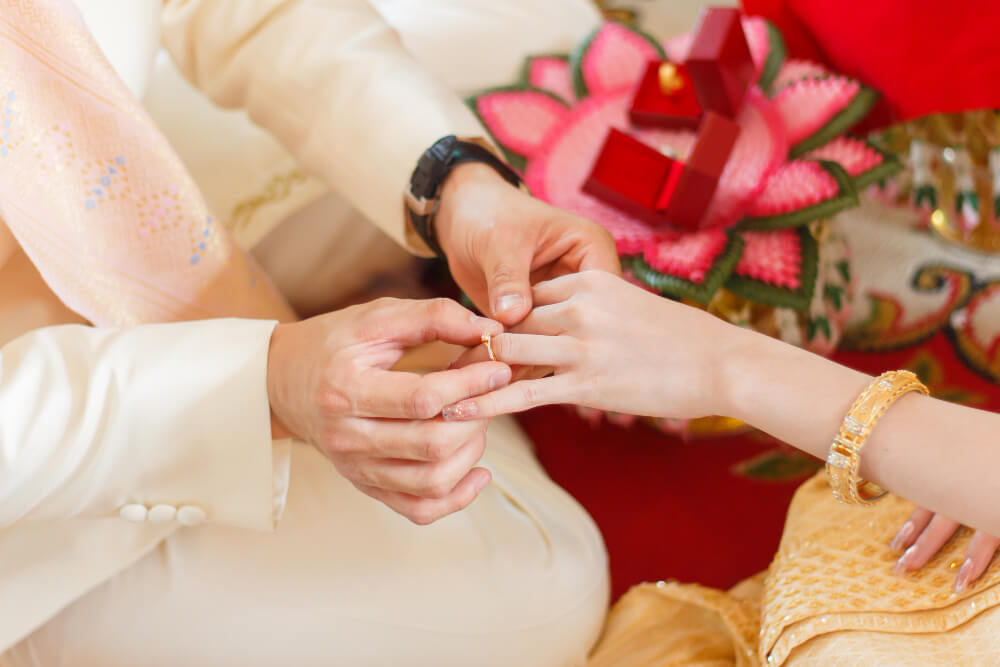
homogeneous group positive—Every Indian family has this meeting. There’s no agenda. There are no minutes. No RSVP is required.
Someone’s cousin turns 24. A mausi makes a single comment over dinner. And suddenly twelve people with zero qualifications in human psychology are running a full-blown matrimonial strategy session.
Raise your hand if you’ve ever been at a family gathering, engrossed in your thoughts and enjoying your biryani, only to hear someone say, “Beta, you’re at that age now.” (Don’t worry. We’ve all been there. We’re going to unravel the method behind this madness.
The Great Indian Debate That Never Actually Ends

Here’s the thing about the arranged marriage debate: it never concludes. It just pauses. For about four months. Then someone gets a Shaadi.com notification and the whole thing starts again.
Gen Z—that generation of 18- to 27-year-olds currently in their sixth situation and third career pivot—is now officially at the center of this debate. And their parents, aunties, and that one Sharma uncle who thinks LinkedIn is a dating app are not going to let it go quietly.
The question being asked in living rooms from Indore to Bangalore, in WhatsApp groups named things like “Family ❤️” and “Khanna Parivar 🌸🙏,” is this: Is arranged marriage still relevant for Gen Z?
The short answer? It’s complicated.
The long answer? Pull up a chair. Someone go make chai. This assignment is going to take a while.
First, Let’s Agree on What “Arranged Marriage” Actually Means in 2026

A few decades ago, arranged marriage meant your father handed your biodata to a man he met at a rotary club, you saw each other’s photograph once, and then you were engaged. That was the whole courtship. A photograph. Sometimes not even a good one – shot in 1994 lighting, slightly blurry, the subject wearing a collar that suggested genuine uncertainty about the decade.
But something happened.
The internet arrived. Then smartphones. Then came Instagram, Hinge, and a generation of Indians who grew up watching Shah Rukh Khan sprint through European airports declaring love—and concluded that this was, indeed, a reasonable standard.
So today, “arranged marriage” in the Gen Z context is less “my parents chose someone” and more “my parents found the lead; I do the due diligence.” Think of it like this: arranged marriage in 2026 is basically a staffing agency. Your family is the recruiter. The biodata is the CV. The “chai meeting” is the interview. And you—the candidate—still have final hiring authority.
Pause and let that sink in.
The process hasn’t disappeared. It’s been rebranded.
The Biodata Economy: A Thriving Market Worth Examining
Let’s talk about the biodata. If you’re a member of Generation Z and you haven’t seen your biodata, rest assured, it exists somewhere. Somewhere. Your mother likely formatted it in Microsoft Word at 11 PM on a Tuesday, using a template she received from someone in her cat party group.
The Indian biodata is a remarkable document. In approximately one A4 page, it attempts to summarize a human being’s entire romantic suitability. It includes:
- Name, age, height (because apparently love is subject to minimum clearance requirements)
- Complexion (a category that continues to exist in 2026, baffling literally everyone under 30)
- Hobbies: Always “reading, traveling, cooking.” Always. No Indian biodata has ever listed “doom-scrolling” or “rewatching Mirzapur,” despite these being statistically far more accurate.
- Family background: Father’s profession, mother’s status (“homemaker” or “also working”—both are fine, but the document notes it either way)
- Expectations from partner: “Simple, family-oriented, adjusting.” Translation: please get along with my mother.
Kavya, a 25-year-old UX designer from Pune, discovered her biodata existed when a relative called to say a “very good proposal” had responded to it. “I hadn’t approved any biodata,” she told me. “My mother said, ‘It’s just for reference.’ The reference had gone to three states. ” (This is an illustrative example to show how universal this experience is.)
Gen Z’s Actual Situation: Let’s Be Honest Here

Here’s what the debate usually ignores. Gen Z is not a monolith. Their views on arranged marriage are truly diverse.
- Camp 1: “Absolutely not, I’ll find my own person.” This cohort is the Hinge-using, therapy-going, attachment-style-aware Gen Z. They’ve read about love languages. They follow accounts about “green flags.” They’ve had approximately four situationships that ended with a voice note, and they are committed to figuring out love on their terms, thanks very much.
- Camp 2: “I’m open to it, actually.” This is larger than anyone expects. Many members of Gen Z, particularly first-generation urban Indians who have observed their parents’ arranged marriages operating quietly and with remarkable stability, show no opposition. What they want is agency in the process—and increasingly, they’re getting it.
- Camp 3: “I have told my parents I’m open to it just to get them off my back while I am, in fact, on Bumble.” This camp is the largest and will not be discussed further out of respect for everyone involved.
The WhatsApp Matrimonial Industrial Complex
No conversation about arranged marriage in the Gen Z era is complete without addressing the real matchmaking infrastructure of modern India: the family WhatsApp group.
The family WhatsApp group operates as an asynchronous matchmaking platform with zero UX design and unlimited reach. At any given moment, a “proposal” can arrive via a photo dump from your mother’s college friend’s sister-in-law in Chandigarh, accompanied by a voice note that begins: “Bahut achha ladka hai…” followed by six minutes of someone’s grandmother auditing the boy’s entire ancestral line.
Arjun, 26, a software engineer from Bangalore, once received a proposal at 2:17 AM. The message was a blurry screenshot of a Shaadi.com profile sent to a group called “Our Precious Children 💛.” His cousin gave it a thumbs up in response. In response, his mother used three question marks. “Height?” his father asked, seemingly awake at 2:17 AM for reasons no one looked into.
This represents the essence of the Gen Z arranged marriage experience.
What Gen Z Actually Wants (And Why the Debate Misses the Point)

This is the typical breakdown of the living room debate. The older generation frames arranged marriage as a binary: you either accept the process completely, or you’re being “influenced by Western culture” and will end up alone with a Netflix subscription and opinions.
Gen Z frames it differently. They’re not rejecting arranged marriage. They’re negotiating the terms.
What Gen Z actually wants from any marriage process—arranged, love, or the increasingly common “started as arranged, became love before the first meeting ended”:
- **Time.**ot three meetings in six weeks. Actual time to understand someone.
- **Compatibility beyond horoscope.** Gen Z is the first generation to earnestly discuss emotional availability in a chai meeting. The aunties are still catching up.
- **No complexion column.** We really need to retire this one.
- **The right to say no without a family crisis.** This is the big one. “Not interested” should not trigger a two-week post-mortem where everyone’s feelings are examined except the person who said no.
- **Genuine agency,** not performative agency, is where you technically have the choice but the entire emotional weight of the family sits on one side of the scale.
The “Love Marriage vs. Arranged Marriage” Debate Is Also Outdated

Here’s a truth that will make your Sharma uncle deeply uncomfortable: the line between love marriage and arranged marriage has almost entirely dissolved for Gen Z.
Meet Priya and Rohan. They matched on Hinge in Delhi. They dated for eight months. Then Priya introduced Rohan to her parents. Her parents loved him. His parents met her parents. A formal roka ceremony happened six months later. Was that a love marriage? An arranged marriage? A hybrid?
Her mother tells people it was “semi-arranged.” His father says, “we also approved.” Priya says “we just met on an app and liked each other.” Rohan says “please don’t ask me this at parties.”
The point is that the process is converging. Families are increasingly fine with the idea that the couple meets first—as long as the families are involved at some point before the mandap.
Pause and let that sink in.
The same result. The same ritual. You’ll forget the names of the same number of relatives. There, the route has just been updated.
Read more about: Are We Raising a Generation That Can’t Handle Failure?
The Real Problems Nobody Talks About at the Chai Meeting
Let’s be honest about the parts of the arranged marriage process that genuinely need a rethink—not because Gen Z is “too Westernized,” but because they’re legitimate issues.
- The caste filter. A significant number of matrimonial profiles—on platforms, in biodata requests, and in family preferences—still lead with caste compatibility. Gen Z, by and large, finds this concept uncomfortable. Many explicitly don’t want it. Yet it persists, quietly, in the “family background” section and in the unspoken subtext of “we’re looking for someone from our community.”
- The timeline pressure. The clock starts at 23 for women. Sometimes 22. Sometimes the minute you graduate. The anxiety this creates is not a minor inconvenience—it’s a genuine mental health issue affecting young Indians who feel their worth is being indexed to their marital status.
- The “adjusting” expectation. This word shows up relentlessly in what families “want” in a daughter-in-law. It is almost never applied to sons. Gen Z women have noticed. They have opinions. And they’re right.
- The illusion of choice. Sometimes the agency is real. Sometimes it’s presented as real but every “no” creates a family incident. Learning to tell the difference is one of the more exhausting things young Indians have to navigate.
Actually, Here’s What Arranged Marriage Gets Right
Here’s the part where we acknowledge something the “love marriage always” crowd sometimes skips over.
The arranged marriage process, at its best, involves community. It involves people who actually know you—not a curated Instagram version of you—vouching for someone and offering context. Your mother knows things about you that make you happy that you haven’t figured out yet. (Irritating but sometimes accurate.)
It creates accountability. When families are involved, there’s social skin in the game. This can be pressure, yes—but it can also mean that both families are genuinely invested in making the relationship work.
It can reduce the isolation of modern dating. Anyone who has been on the apps for more than six months will tell you: the swiping economy is exhausting. You are evaluated on photographs and witty openers, and the whole thing feels like a performance review. Having a structure—even an imperfect one—removes some of that specific loneliness.
Meera, a 27-year-old teacher from Chennai, went through an arranged marriage process at 25. “I was skeptical,” she says. “But my parents introduced me to someone I would never have met on my own. We took six months, travelled together twice, and talked every day. I chose him completely. The introduction was arranged. Everything after that was us.” (Illustrative example.)
Common Mistakes Families Make in This Debate (And Why They Backfire)
- Mistake 1: Framing it as “our culture vs. your generation.” This immediately puts Gen Z on the defensive and guarantees the conversation goes nowhere productive.
- Mistake 2: Setting a deadline. “By 25” or “before your cousin’s wedding” are not strategies. They’re pressure tactics that breed resentment, not good matches.
- Mistake 3: Involving seventeen people before the candidate knows a proposal exists. Kavya’s biodata travels to three states before she knows it, which is amusing in retrospect. In the moment, it’s a trust issue.
- Mistake 4: Treating “no” as a negotiation opener. When a Gen Z person says they’re not interested in a proposal, that’s the answer. Sending the proposal again three weeks later with “but he got a promotion” is not a counteroffer. It’s exhausting.
- Mistake 5: Confusing family values with family control. One is something Gen Z largely respects. The other is something they’re firmly walking away from. The difference matters enormously.
- Mistake 6: Assuming the goal is marriage. For Gen Z, the goal is a good relationship that might become a marriage. These are different starting points and they lead to very different conversations.
The Bottom Line
Here’s the thing: arranged marriage isn’t dying. It’s being renegotiated – by a generation that grew up watching both their parents’ stable 30-year unions and their friends’ spectacular Hinge disasters and concluded that maybe the answer lies somewhere in the middle.
Gen Z doesn’t need their families to butt out. They need their families to evolve. Less “we’ve found someone,” “beta”—more “we met someone interesting; want to take it from here?” Less deadline, more direction. Less biodata complexion column, more actual conversation.
The families that make this shift are the ones getting invited to the wedding. The families that don’t are getting a phone call after the fact.
Which side of that equation does your family want to be on?
Drop your most chaotic family matrimonial story in the comments—I promise nothing will surprise me at this point. And if this resonated, share it with the one person in your family who most needs to read it. (You know exactly who that is.)