
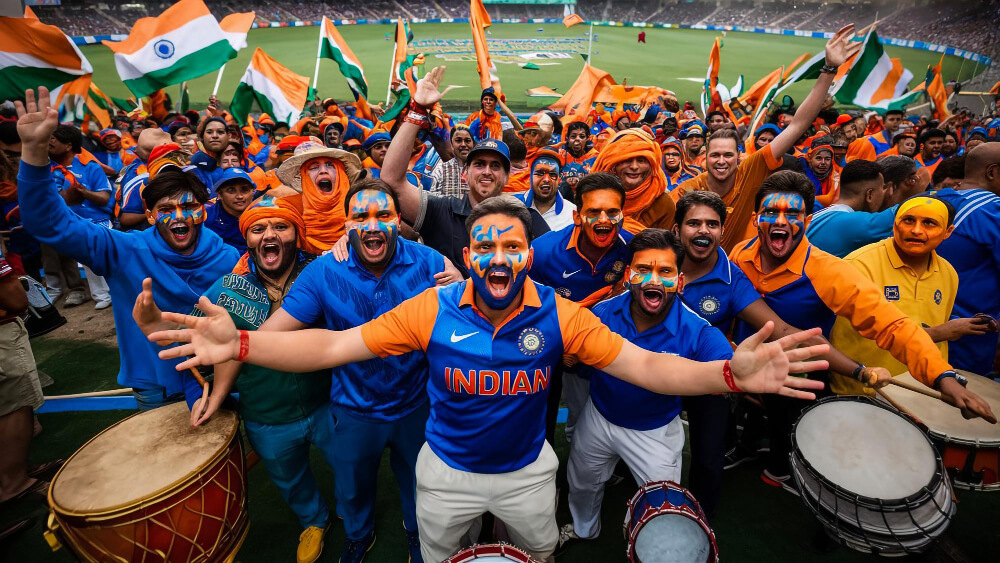
Walk through any Indian street after a major cricket win and you’ll feel it. Firecrackers. Social media explosions. Billboards. Brand endorsements. Instant hero worship. This is why the debate around India Still Worship Cricketers More Than Olympians refuses to fade away. Cricket victories don’t just feel like sporting achievements—they feel like national festivals.
Now compare that to an Olympic medal.
Yes, there is celebration. Yes, there is pride. But the scale feels different.
When discussing whether India Still Worship Cricketers More Than Olympians, the contrast becomes hard to ignore. Olympic champions receive applause, government rewards, and trending hashtags—but cricketers often receive lifelong brand deals, media saturation, and celebrity status that transcends sport.
The emotional investment, commercial backing, and cultural spotlight clearly lean in one direction.
Which raises an uncomfortable question:
Why does India still worship cricketers more than Olympians?
Which brings us to the uncomfortable but important question:
Why Does India Still Worship Cricketers More Than Olympians?
This is not about diminishing cricket. Nor is it about glorifying Olympic sports artificially. It’s about understanding culture, economics, media influence, and national psychology.
In this opinion piece, we unpack why India still worships cricketers more than Olympians— and whether that mindset is slowly changing.
The Historical Foundation of Cricket Worship
To understand Why Does India Still Worship Cricketers More Than Olympians, we must go back in time.
Cricket in India is not just a sport.
It is:
- A colonial inheritance
- A post-independence pride marker
- A television-era spectacle
- A corporate-backed entertainment industry
The 1983 World Cup victory wasn’t just a trophy. It was identity. It gave India a global sporting moment.
Olympic sports, on the other hand, never had that single mass-television turning point.
History created emotional investment in cricket.
The Economics of Fame
Another key answer to Why Does India Still Worship Cricketers More Than Olympians lies in money.
Cricket in India is:
- Highly commercialized
- Broadcast-friendly
- Corporate-sponsored
- League-driven (IPL effect)
Top cricketers earn:
- Massive endorsement deals
- Franchise contracts
- Social media sponsorships
Olympians often struggle for funding before winning medals.
Visibility drives worship.
Money drives visibility.
It becomes a cycle.
Media Amplification
Media plays a critical role in shaping who becomes a hero.
Cricket matches are
- Televised extensively
- Debated daily
- Highlighted across news channels
Olympic sports receive attention, mostly during the Olympic season.
For 3 years and 11 months, many Olympic athletes remain out of mainstream headlines.
This media imbalance partially explains Why Does India Still Worship Cricketers More Than Olympians.
Frequency of Engagement
Cricket offers year-round content:
- International series
- IPL seasons
- Domestic tournaments
The Olympics happen once every four years.
Emotional attachment grows with frequency.
People build relationships with cricketers because they see them constantly.
Olympians appear in brief, intense bursts.
That difference matters in answering Why Does India Still Worship Cricketers More Than Olympians.
Accessibility & Aspiration
Every Indian child has played cricket in a lane, terrace, or playground.
Most people do not have access to:
- Professional athletics tracks
- Gymnastics infrastructure
- Shooting ranges
- Olympic-grade facilities
Cricket feels accessible.
Olympic sports often feel distant.
When a sport feels relatable, hero worship becomes natural.
Social Narratives and Marriage Market
In India, success carries social currency.
A national cricketer is instantly recognizable.
In some traditional contexts—even in arranged marriage discussions—being a professional cricketer carries massive prestige.
An Olympic athlete who is not highly decorated may receive less automatic social recognition.
Status perception shapes public worship.
The Role of Failure & Forgiveness
Cricket fans are accustomed to players failing.
A batsman can score zero one day and a century the next.
There are multiple opportunities for redemption.
Olympic sports are unforgiving.
One mistake in a 10-second sprint can cost four years of preparation.
India also struggles culturally with handling failure.
We often glorify winners intensely but don’t build long-term support for consistent Olympic performers.
That inconsistency reinforces the imbalance behind Why Does India Still Worship Cricketers More Than Olympians.
Corporate Branding & Hero Construction
Cricketers become brands.
They endorse:
- Financial apps
- Luxury cars
- Real estate
- Insurance
- Lifestyle products
They appear in ads daily.
Olympians often receive endorsements post-medal, not during training.
Brand visibility cements public memory.
If hero worship is repeated through advertising, it becomes normalized.
Financial Stability and Career Security
Cricket offers financial security even at domestic levels.
Olympic sports in India often lack structured career pathways.
Many athletes rely on government jobs or sponsorship struggles.
In a society that values financial independence at 40, stable earning potential influences admiration.
Parents are more likely to encourage cricket than fencing or archery.
Economic practicality shapes cultural preference.
Infrastructure & Grassroots Investment
India has invested heavily in cricket infrastructure:
- Stadiums
- Academies
- Leagues
- Broadcasting rights
Olympic sports infrastructure is improving but still uneven.
Without grassroots visibility, mass connection is difficult.
This systemic imbalance feeds into Why Does India Still Worship Cricketers More Than Olympians.
National Pride & Global Validation
Cricket rivalries — especially India vs Pakistan or Australia — carry emotional weight.
They blend sport with national identity.
Olympic medals also bring pride, but cricket rivalries are more frequent and emotionally charged.
Nationalistic narratives amplify cricket visibility.
Social Media Era: Is the Shift Beginning?
Social media is slowly changing dynamics.
Olympic athletes now:
- Share training journeys
- Build personal brands
- Gain followers independently
Platforms allow direct storytelling.
This reduces reliance on traditional media.
The gap may narrow over time.
Youth Aspirations Are Evolving
Urban India increasingly discusses:
- Work-life balance
- Four-day workweek in India
- Diverse career paths
- Alternative success stories
Similarly, sporting aspiration is expanding.
More parents now consider:
- Badminton
- Wrestling
- Shooting
- Athletics
The dominance of cricket is still strong, but exclusivity is fading.
Should India Change?
The debate around Why Does India Still Worship Cricketers More Than Olympians isn’t about eliminating cricket love.
It’s about balance.
Imagine if Olympic sports received:
- Equal sponsorship
- Year-round broadcasting
- Grassroots promotion
- School-level encouragement
Public worship might diversify naturally.
The Civic Angle
Sports culture reflects national priorities.
Countries that treat Olympic success as national policy see broader investment.
In a democracy discussing reforms like mandatory voting, public engagement matters.
When citizens demand diversified sports funding, systems respond.
Change often begins with conversation.
So, Why Does India Still Worship Cricketers More Than Olympians?
Because:
- Cricket is historically entrenched.
- Media amplifies it relentlessly.
- Corporates monetize it heavily.
- It feels accessible and relatable.
- It offers financial stability.
Olympic sports are growing, but the ecosystem gap remains.
The worship imbalance is structural, not emotional.
Final Thoughts
FAQs
- Why are cricketers more famous than Olympians in India?
Cricket receives more media coverage, sponsorship, and year-round engagement. - Do Olympians get less financial support?
Many Olympic athletes struggle for funding before winning medals. - Is cricket more accessible than Olympic sports?
Yes, cricket is widely played in streets and schools across India. - Does media influence sports popularity?
Extensive broadcasting significantly increases public attachment. - Are younger Indians shifting toward Olympic sports?
Yes, visibility of badminton, wrestling, and athletics is increasing. - Does arranged marriage culture impact sports prestige?
Social recognition of certain professions influences perceived status. - Is financial independence at 40 easier through cricket?
Professional cricket offers higher earning stability compared to many Olympic sports. - Why are Olympic athletes less visible between games?
Media coverage spikes during the Olympics but reduces afterward. - Can social media change this imbalance?
Yes, athletes can now build personal brands independently. - Should India diversify sports investment?
Broader support could increase balanced national sporting success.