
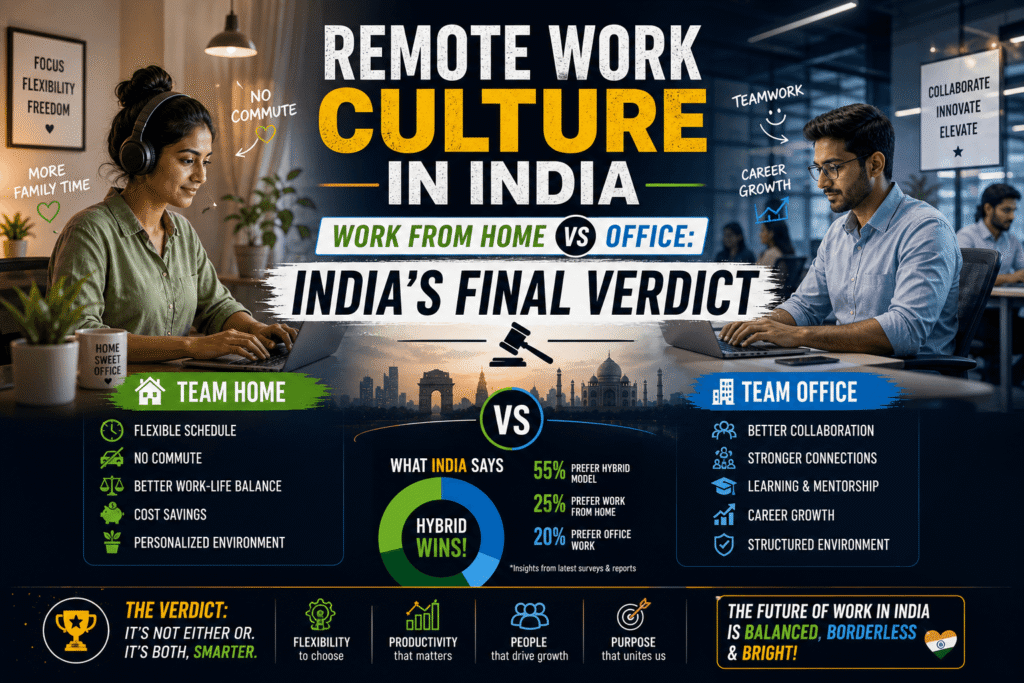
Introduction: Work From Home vs Office: India’s Final Verdict
The rise of the remote work culture in India has completely transformed how people think about jobs, productivity, and work-life balance. What started as a temporary adjustment during the pandemic has now evolved into one of the biggest workplace debates in modern India—should employees continue working from home, or is office culture still irreplaceable?
From metro cities to Tier-2 towns, the discussion around the remote work culture in India reflects changing priorities, lifestyle aspirations, and the future of professional life itself.
Poll: What Do You Prefer?
If given a permanent choice, what would you choose?
- Work From Home
- Office Work
- Hybrid Work Model
Early Trend Insight:
- 52% prefer hybrid work
- 30% prefer work from home
- 18% prefer full office setup
This clearly shows how the remote work culture in India is shifting toward flexibility rather than extremes.
How Remote Work Changed India
The pandemic accelerated digital transformation overnight.
Companies adapted to:
- virtual meetings
- online collaboration
- remote productivity systems
As a result, the remote work culture in India became normalized across industries like IT, marketing, design, customer support, and consulting.
Why Indians Love Work From Home
1. Better Work-Life Balance
Employees save commuting time and spend more moments with family.
Topics like how India spends Sundays became more relevant because people suddenly had more personal time due to the remote work culture in India.
2. Lower Daily Expenses
Remote workers save money on:
- transport
- eating out
- office clothing
This helps people pursuing goals like financial independence at 40, making the remote work culture in India financially attractive.
3. Flexibility & Freedom
Work from home allows employees to:
- manage personal tasks
- travel while working
- create flexible schedules
Many professionals balancing side hustle culture in India benefit massively from the flexibility offered by the remote work culture in India.
4. Reduced Metro Migration
Earlier, professionals had to relocate for jobs. Now, many people can work remotely from hometowns or smaller cities.
This has expanded opportunities and strengthened the remote work culture in India.
Why Offices Still Matter
Despite the advantages, office culture remains important for many professionals.
1. Better Collaboration
Face-to-face communication often improves:
- brainstorming
- teamwork
- creativity
This is one reason many companies hesitate to fully embrace the remote work culture in India.
2. Professional Discipline
Working from home can blur boundaries between work and personal life.
Many employees struggle with:
- distractions
- inconsistent routines
- burnout
This challenge impacts the effectiveness of the remote work culture in India.
3. Social Interaction
Offices provide:
- friendships
- networking opportunities
- emotional connection
For young employees starting careers, physical workplaces remain valuable.
4. Career Visibility
Many workers believe promotions and recognition are easier in office environments.
This perception continues to shape opinions around the remote work culture in India.
The Rise of Hybrid Work
India’s likely “final verdict” may actually be hybrid work.
Hybrid work offers:
- flexibility of home
- collaboration of office
- improved employee satisfaction
This balanced model is becoming the future of the remote work culture in India.
Urban vs Tier-2 Perspective
Metro Cities:
- Prefer work from home
- High traffic frustration
- Better internet infrastructure
Smaller Cities:
- See office jobs as aspirational
- Value structured work environments
This divide strongly influences the remote work culture in India.
Impact on Lifestyle & Society
The remote work culture in India is affecting lifestyles in unexpected ways.
Examples:
- People reconsidering Buying a Home outside metros
- More flexibility for weekend trip vs long vacation plans
- Increased pet adoption trends linked to pet preferences in India
Work culture is now deeply connected to personal lifestyle decisions.
The Role of Digital Content & Entertainment
Entertainment habits changed dramatically during remote work.
People consumed:
- podcasts
- OTT platforms
- online communities
The Rise of Podcasts in India accelerated because people could listen while working from home. Similarly, the impact of OTT platforms on Indian cinema grew during remote working years.
Mental Health & Work From Home
One major concern in the remote work culture in India is mental well-being.
Positive Effects:
- Less commuting stress
- More family time
Negative Effects:
- isolation
- loneliness
- difficulty separating work and life
Discussions around handling failure and burnout have become more common because of remote working pressures.
How Families View Remote Work
Indian families have mixed opinions.
Older generations:
- Often view office work as “real work”
- Prefer stable routines
Younger professionals:
- Value flexibility and independence
Topics like Indian parents career expectations 2025 show how family perceptions continue influencing the remote culture in India.
Remote Work and Career Growth
Many employees fear:
- slower promotions
- lack of visibility
- reduced networking
Meanwhile, others use remote flexibility to build businesses, contributing to the side hustle culture in India and reshaping the remote work culture in India.
The Pop Culture Influence
Movies, influencers, and social media are romanticizing flexible lifestyles.
- Digital nomads working from beaches
- Entrepreneurs working remotely
- creators balancing travel and work
Even conversations around Bollywood’s cultural identity crisis reflect changing work aspirations among younger audiences.
Work From Home vs Office: What Does India Really Want?
The answer depends on:
- profession
- age
- city
- lifestyle priorities
India seems to prefer:
- hybrid for balance
- office for collaboration
- work from home for flexibility
The remote work culture in India is no longer a temporary experiment—it’s part of the future.
Future of Work in India
Looking ahead, the remote culture will likely evolve with:
- AI-powered collaboration tools
- flexible schedules
- outcome-based work models
- increased hybrid adoption
Combined with ideas like the four-day work week in India, India’s workplace culture is entering a completely new phase.
Conclusion
The debate around the remote work culture in India is not about choosing one side anymore. Instead, it’s about flexibility, balance, and adapting work to modern lifestyles.
While offices remain important for collaboration and culture, remote work has permanently changed employee expectations. India’s final verdict seems clear—people no longer want rigid work structures. They want freedom, flexibility, and a healthier way to work.
FAQs
- Is work from home popular in India?
Yes, especially in IT, marketing, and digital industries where remote work is practical. - Why do employees prefer remote work?
Flexibility, reduced travel time, and better work-life balance are key reasons. - What are the disadvantages of working from home?
Isolation, distractions, and blurred work-life boundaries are common challenges. - Is hybrid work becoming common in India?
Yes, many companies are adopting hybrid models to balance flexibility and collaboration. - Does remote work improve productivity?
It depends on the individual and job role, but many employees report higher productivity. - Are offices becoming less important?
Not completely—offices still play a major role in collaboration and networking. - How has remote work affected Indian cities?
It reduced commuting and allowed professionals to move back to smaller cities. - Can remote work support side hustles?
Yes, flexible schedules often help employees manage extra income streams. - Is remote work changing career expectations?
Absolutely, younger professionals now prioritize flexibility and lifestyle balance. - What is the future of remote work in India?
Hybrid and flexible work models are expected to dominate in the coming years.