Introduction: Chai vs Coffee—India Has Voted
The chai vs coffee debate is one of India’s most relatable everyday discussions. Whether it’s a roadside chai tapri or a premium coffee café, Indians feel a deep emotional connection to their preferred beverage. For some, chai is comfort, nostalgia, and routine. For others, coffee represents productivity, modern lifestyle, and café culture.
But as India’s lifestyle rapidly evolves, the chai vs coffee debate is no longer just about taste—it reflects changing habits, work culture, identity, and even social status.
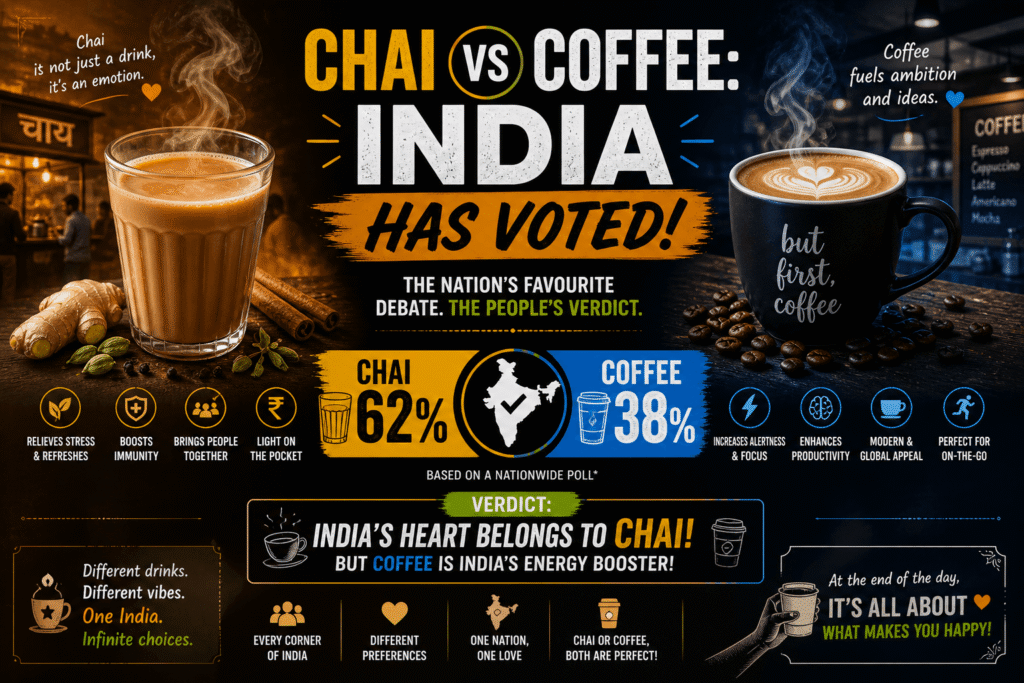
Poll: India Has Voted
If you had to choose one forever, what would it be?
- Chai
- Coffee
Early Poll Trends:
- 68% chose chai
- 32% chose coffee
The results clearly show that while coffee culture is growing fast, the chai vs coffee debate still leans heavily toward India’s traditional favorite.
Why Chai Rules India
Chai is more than a drink—it’s an emotion.
From railway stations to family kitchens, chai has become deeply embedded in Indian culture. The emotional attachment surrounding the chai vs coffee debate often begins with childhood memories.
1. Chai Is Affordable & Accessible
One major reason chai dominates the chai vs coffee debate is affordability.
You can find chai:
- at street stalls
- offices
- homes
- local markets
Unlike premium coffee culture, chai remains accessible across every income group in India.
2. Chai Connects People
Tea breaks are social rituals in India.
Whether discussing:
- politics
- cricket
- language debate in India
- workplace gossip
chai creates conversations and bonding moments that define the chai vs coffee debate culturally.
3. Chai Fits Indian Lifestyle
Chai is deeply tied to daily routines.
- Morning wake-up drink
- Evening relaxation
- Rainy-day comfort beverage
Even discussions around how India spends Sundays often include chai as a central part of family time.
Why Coffee Culture Is Rising
Despite chai’s dominance, coffee is rapidly building its own identity.
The growing café ecosystem is changing the chai vs coffee debate among younger Indians.
1. Coffee Represents Urban Lifestyle
Coffee has become associated with:
- startups
- freelancers
- remote workers
- creative professionals
The rise of side hustle culture in India and startup environments has strengthened coffee’s image in the chai vs coffee debate.
2. Café Culture Is Booming
Modern cafés are not just about beverages anymore.
They function as:
- workspaces
- social hubs
- dating spots
- networking zones
This transformation has made coffee aspirational in the chai vs coffee debate.
3. Coffee and Productivity Culture
Many professionals associate coffee with focus and hustle.
As conversations around the four-day work week in India and productivity evolve, coffee consumption continues rising in urban India.
The Urban vs Traditional Divide
The chai vs coffee debate often reflects India’s changing social landscape.
Chai Dominates:
- Tier-2 & Tier-3 cities
- family households
- traditional workspaces
Coffee Dominates:
- metros
- startup ecosystems
- premium urban spaces
This divide highlights how modernization is shaping the chai vs coffee debate.
Social Media’s Influence on Beverage Choices
Instagram and pop culture have changed drinking habits.
Coffee aesthetics dominate:
- reels
- influencer culture
- café photography
Meanwhile, chai maintains authenticity and emotional connection in the chai vs coffee debate.
The Emotional Power of Chai
For many Indians, chai symbolizes the following:
- comfort
- simplicity
- nostalgia
- conversations with family
Even topics like arranged marriage and family gatherings are incomplete without tea discussions, strengthening chai’s emotional dominance in the chai vs. coffee debate.
Coffee’s Aspirational Identity
Coffee, on the other hand, represents the following:
- ambition
- independence
- modernity
Young professionals chasing financial independence at 40 often identify more with coffee culture and urban workspaces.
The Work Culture Connection
The workplace plays a major role in the chai vs coffee debate.
- Traditional Offices: tea breaks dominate
- Startup & Corporate Spaces: coffee machines everywhere
The rise of remote work and the career choices of Indian youth have also significantly influenced beverage preferences.
Entertainment & Beverage Trends
Entertainment has shaped the chai vs. coffee debate too.
- The impact of OTT platforms on Indian cinema normalized café culture
- Reality television in India glamorized coffee-shop conversations
- Discussions around Bollywood’s cultural identity crisis often mirror traditional vs modern lifestyle shifts
Health Perspective: Chai vs Coffee
Both drinks have pros and cons.
Chai:
- comforting
- contains spices
- high sugar intake risk
Coffee:
- boosts alertness
- helps concentration
- excessive caffeine concerns
Health-conscious Indians are increasingly personalizing choices within the chai vs coffee debate.
The Rise of Premium Chai
Interestingly, chai itself is evolving.
Today we see:
- artisanal tea cafés
- organic chai blends
- premium tea brands
This modernization is helping chai stay competitive in the chai vs coffee debate.
Weekend Lifestyle & Beverage Preferences
Your preferred drink often reflects your lifestyle.
- Relaxed personalities → chai lovers
- hustle-driven personalities → coffee lovers
Even trends like weekend trip vs long vacation indirectly shape how people consume beverages socially.
Digital Culture & Conversations
The Rise of Podcasts in India has also impacted beverage habits.
Many listeners now associate the following:
- podcasts + coffee
- family chats + chai
Digital habits are subtly influencing the chai vs coffee debate among younger audiences.
So, What Does India Really Prefer?
India still overwhelmingly prefers chai emotionally.
But coffee is growing rapidly among:
- urban youth
- professionals
- creators
- entrepreneurs
The future of the chai vs coffee debate may not be about replacing one another—but about coexistence.
Conclusion
The chai vs coffee debate is ultimately about more than beverages. It reflects India’s transition between tradition and modernity, comfort and ambition, nostalgia and aspiration.
Chai remains India’s emotional favorite, deeply rooted in culture and family life. Coffee, however, is becoming the symbol of a fast-moving, globally connected generation.
And perhaps that’s India’s final verdict—chai owns the heart, but coffee is winning the hustle.
FAQs
- Which is more popular in India: chai or coffee?
Chai remains significantly more popular across most regions of India. - Why is coffee culture growing in India?
Urbanization, startup culture, and café trends are driving coffee consumption. - Is chai healthier than coffee?
Both have benefits and drawbacks depending on ingredients and consumption levels. - Why do Indians emotionally connect with chai?
Chai is associated with family bonding, comfort, and everyday routines. - Which drink is preferred in offices?
Traditional offices prefer chai, while startups often lean toward coffee. - Is coffee considered a status symbol in India?
In urban spaces, coffee culture is often linked with modern lifestyle and social status. - Are premium tea cafés becoming popular?
Yes, modern chai cafés are growing rapidly across Indian cities. - Which generation prefers coffee more?
Millennials and Gen Z are driving coffee culture growth in India. - Does social media influence beverage choices?
Absolutely, café culture and aesthetic coffee content heavily influence younger audiences. - Will coffee overtake chai in India?
Coffee is growing, but chai’s cultural connection remains extremely strong.